Archive for Standard 1: Design

EDTECH 506: The Shape of Things to Come

Sample of Unit page

Unit 3 – Bleeding Control and Shock Management


One of the first lessons I learned in elementary school was the use of shapes in art. Like many of my classmates, I happily drew triangles, circles, squares, and rectangles intermingled with lines of all lengths and thicknesses to represent happy families, houses, flowers, trees, and the bright shining sun. As time passed, I used ovals and more lines to practice the alphabet and numbers 0-9.

Shapes and lines continue to play an important part in my hobbies of photography and drawing. My eyes seek out and find shapes and patterns everywhere I look. This chapter has been by far a favorite as I gain new insight to some of the visual characteristics of shapes and how they communicate unity, emotions, or organization. I was intrigued by the examples Lohr sets forth in Figures 10-2 through 10-6 (pp. 251-255) and noted that I am usually drawn to those layouts that depict unity and those that separate and define. Therefore it was no surprise that I chose to use those elements in my own layout for my unit. I chose to use simple rectangles to organize the information on a standard computer display. Other units can be quickly accessed on the lower ribbon links. I like the way rectangles highlight and organize the information with clean lines. My use of color parallels the colors we use on our local EMS logo and ambulance. When my daughter pointed out that my page looked a little bit “cluttered” I added the broken circle in an attempt to unify the page elements and a solid line of a different color to separate and define the other units. I am pleased with the results, but knowing my penchant for revision, left the layers intact for future editing.

Leave a Comment

EDTECH 506 Learning by Design

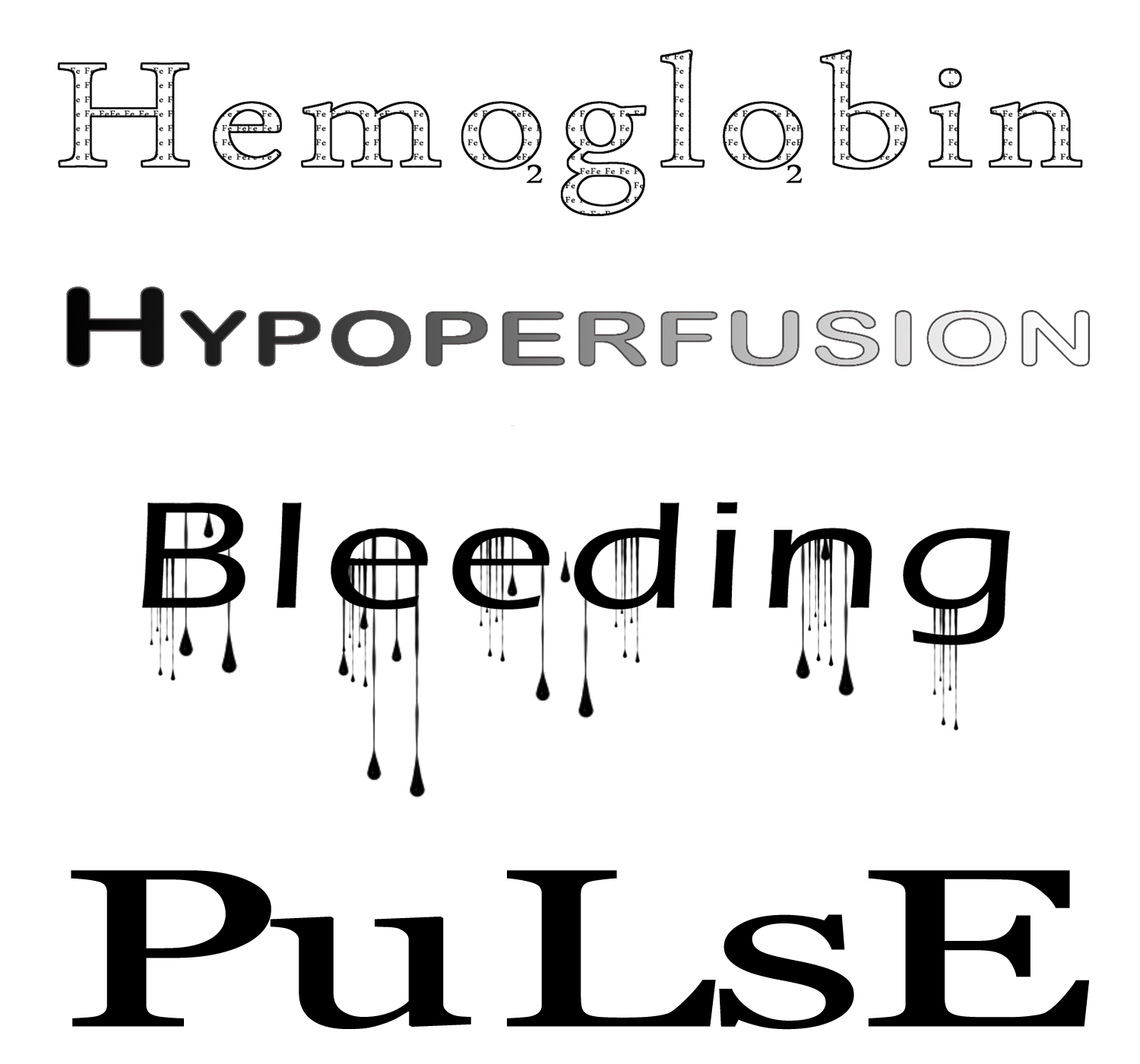
Visual representation plays a vital role in my life. I remember putting on my first set of glasses and realizing for the first time what a difference detail makes in our world view. That impression gave way to a lifelong study of detail that impacts every aspect of my life. The past weeks in this course are no exception as I considered what is universal design, what would be a useful unit of instruction, and how might I best represent myself through visual clues. After submitting the project plan, I nearly changed topics when reading the typography assignment. How might I create what I might consider illustrated text that conveys meaning. I was surprised to find that the exercise, though challenging, was a pleasant task.

Four Words

Vital words for bleeding control and shock management unit of instruction.


When referring to Mayer’s (2001) research, Lohr emphasizes that “visuals be designed so that they support cognitive processes of selection, organization, and integration” to maximize learning (2008 p.63). Using that formula, I hope to create a unit of instruction that will be easily remembered, and easily implemented when conditions call for it. After all, “a picture is worth a thousand words.”

Reference
Lohr, L. (2008). Creating graphics for learning and performance: lessons in visual literacy (2 ed.). Upper Saddle River, NJ: Merrill. Retrieved 2012

Leave a Comment

EDTECH 504: Building a Framework for Lifelong Learning

I like to think of myself as a constructivist teacher, but state mandates, pressing schedules and demanding standards often cloud my purpose. I agree with Vygotsky, Bruner (to some extent), Maslow, and Gardner, but I find Piaget’s four stages of cogntive development (Leanord, 2007) rather confining in application. I am also a proponent of brain-based learning, and have spent years researching how our brains anaylyze, accomodate, and evaluate new information.
One way I expand students’ understanding is to make their thinking process visible. Students demonstrate different thinking processes by mapping their problem solving aloud or on paper. When they are learning new thinking operations, I provide scaffolds by utilizing process worksheets and cues. Exercising quality thinking and providing meaningful purpose motivates the students to improve their thinking and provides better cognitive skills to apply toward subject-matter learning, or the content of the lesson. To make sure I plan activities that develop quality thinking, and to better develop my constructivist teaching approach, I try to consistently practice reflective assessment. Students write in journals and think about the processes they used to gain a new skill. Unfortunately, this reflection is sporadic, and oftentimes is used as an afterthought to more objective forms of assessment.
I am happy to say that I have been commended for creating a secure community environment where students take thinking risks and accept the risks taken by their peers. Risk-taking is evident by the quality of interaction between me and my students, and between my students and their fellow classmates. I envision extending that level of secure classroom to promote the different intelligences within that community. Ideally, learning is concentrated on higher levels of thinking, such as understanding, analysis, application, and synthesis of ideas and skills. That learning is reinforced with the ability to practice reflective thinking.
At risk of contradicting Phillips position that I as a teacher “treat the curriculum of an educational institution as vehicle for furthering the socio-political interests and goals of a ruler or ruling class” (Phillips, 2009) besides development of quality thinking, I also plan situations for social interaction to take place and further develop communities of practice (Barab, 2000). The first element of interaction is the implementation of rules, or guidelines, with specific and reasonable consequences for breaking those rules to be applied consistently. Even after ten years of classroom experience, I find myself inconsistent in applying consequences for minor infractions. Once rules are established, I promote social interaction with active classroom discussion on controversial or value-based topics. For example, I posed to my seventh grade math class, “ethical standards are necessary in a school setting” and randomly divided the class in to two groups; one for pro, one for con. The groups had five minutes to research online and come up with an oral argument for their assigned position. Being able to argue for something one believes in is a skill; being able to argue for something one does not hold true is an art.
When the groups have completed the assignment the concept of ethics will not only have been learned, but experienced. At that point, I guided reflection of the groups as to what processes they put into practice to arrive at the level of learning they achieved. In the future, I would like to add a self-reflection on how the groups did in arriving at the level of the class as a whole, and determine what actions could be taken next time for even further learning.
As a teacher, I have the responsibility to provide experiences that scaffold future learning. Furthermore, I must be a reflective practitioner in order to keep growing. In my classroom, I expect my students to learn and to recognize different thinking processes to fall back on when they encounter an unfamiliar situation or problem. They will learn how to interact with others through good communication skills and respect for diversity, and learn to draw off each other’s strengths to complement individual weaknesses. They will develop self-esteem and take pride in their accomplishments. It is my goal to fulfill my teaching responsibilities and to motivate students to fulfill their learning responsibilities. My actions in planning, delivery, and assessment will be based on those aspects, and I will continue to strive for personal and professional development to achieve my goal. I would like to define education as that which is gained upon application, synthesis, and reflection of an experience. I have a duty to teach students how to inquire, think, and know – and then how to analyze, apply, synthesize and evaluate so that they, in turn, can contribute to organizational, social, and global values.

REFERENCES:
Barab, S., & Duffy, T. (2000). From Practice Fields to Communities of Practice. In Jonasson, D. & Land, S. (Ed.), Theoretical Foundations of Learning Environments (pp. 25-55). Mahwah, NJ: Lawrencw Erlbaum Associates, Inc.
Leonard, K., Noh, E.K., & Orey, M. (2007). Learning Theories and Instructional Strategies. In M. K. Barbour & M. Orey (Eds.), The Foundations of Instructional Technology. Retrieved from http://projects.coe.uga.edu/itFoundations/
Phillips, D.C., “Philosophy of Education”, The Stanford Encyclopedia of Philosophy (Spring 2009 Edition), Edward N. Zalta (ed.), URL = .

Leave a Comment

EDTECH 501: Technology Use Planning Overview

The National Educational Technology Plan (2010) offers a non-prescriptive means of achieving the goals set forth by our nation’s educational leaders. Using it as a referance point provides a common lens through which to view our own objectives and progress towards those goals. In our district, technology planning committee members print out key segments to research and discuss at committee meetings. This blog features the main categories within this post to define how technology planning, implementation, and evaluation impact instruction and student learning.
Innovate and ScaleTeaching: Our district is miniscule. With 57 students in our junior/senior high school, technology offers students a competitive education that would be unavailable without synchronous and asynchronous online learning. Teachers are isolated in their subject areas, teaching six different flavors of their content area daily. Thanks to technology, the days of one person spewing forth knowlege are gone. From cutting-edge industry practices to details of ancient museum pieces, content delivery is supplmented with the vast resources of the Internet that brings a world of knowledge and ideas into the classroom.
Prepare and Connect: I am part of a team of instructional technology leaders made up of teachers, administrators, and other stake holders. Currently we are in the midst of developing a three-year tech plan to replace the existing plan that has met its useful life. Our past technology plan was designed for five years, as the State of Idaho had requested at the time. We have found it to be insufficient to address our expanding use of technology, even though it was beneficial in guiding our newly formed district in the path we are currently taking (our district is in its fifth year).
Infrastructure: Access and Enable: Previous to working in education, I worked in business management. One of the mantras of the day was to think/plan/act/evaluate with the end in mind. I believe that guideline rings true today. Even though we are designing a written technology plan, it’s the structure of our organization’s mission and vision statements that drives the adjustments needed when a new route or detour presents itself.
Assessment: Measure What Matters: Our committee recognizes that the planning stage is ongoing and needs flexibility as technological advances continually change the educational landscape. Because of this elasticity, we believe our tech plan should be designed for not longer than three years, which is in agreement with See (1992). I also am in agreement with See’s comment that “effective technology plans focus on applications, not technology.” Our committee strives to evaluate the effectiveness of current technological practices and endeavors to use technological and traditional methods to measure student achievement. The following example is how teachers in our dstrict have implemented student reponse pads, or “clickers.”
Productivity: Redesign and Transform After a committee determination that our district, teachers, and students would benefit from student response pads, we purchased a set for every classroom. The grant was written in such a manner that professional development for the integration of the devices was paramount to the technology. The first year, contracted trainers worked with teachers and teachers worked with one another redesigning their delivery and assessments to accomodate the devices. We experienced great success, with 75% of the teachers actively using their response pads and using the resulting data to steer their instruction. Students reported especially liking the instant feedback aspect of the systems. Three years later we have one teacher regularly using the response pads. What happened? Two key factors came into play resulting in technology without application: 1) administrative changes; 2) staff retirement, relocation, and replacing. The new staff does not have ownership in the decision, so they are reluctant to implement the devices because they do not see the added value. The unused clickers are waiting to shine, and Karen Roberts (1990) has provided me with 13 ways to bring them out of the storage closet and back into the hands of the students.
The National Education Plan (2010) and the articles provided at the National Center for Technology Planning have added insight and inspiration to the planning process that we are currently undertaking at our district.

Resources:
Robertson, K. (1990). PROMOTING TECHNOLOGY: 13 WAYS TO DO IT. Retrieved November 3, 2011, from National Center for Technology Planning: http://www.nctp.com/html/promoting_technology.cfm
See, J. (1992, May). Developing Effective Technology Plans. Retrieved November 8, 2011, from National Center for Technology Planning: http://www.nctp.com/html/john_see.cfm
U.S. Department of Education Office of Educational Technology. (2010). National Technology Plan 2010. Retrieved November 4, 2011, from ed.gov: http://www.ed.gov/sites/default/files/netp2010.pdf

Leave a Comment

EDTECH 501: A Lesson in Patriotism

My principal, a retired Air Force Senior Master Sergeant, approached me asking that I consider having my photography students “pull something together” for a Veterans’ Day tribute. In the midst of technology glitches, out of state conferencing, and state reporting deadlines, her request seemed a breath of fresh air. The project could be done with mobile devices, and our final product would highlight the advances our district is making with technology. Coincidentally, my EDTECH501 course assignment was to develop a lesson plan that integrated a new technology. Voila! My Lesson Plan
Servicing [an] A-20 bomber, Langley Field, Va. (LOC)

Leave a Comment

EDTECH 501: Plagiarism; Resist the Temptation!

Plagiarism (Latin plagiare “to kidnap”)


Plagiarism
by: brimstef

http://www.xtranormal.com/xtraplayr/12517753/plagiarism

This video (Brimacomb, 2011) covers using someone else’s work as my own (in this case “buying” a paper from a website), copy and pasting without citations, and using my own prior work without instructor permission. As these two college students talk about whether or not to go to the beach with friends, I incorporated something that I learned on this project. I was intrigued by the root (Latin “kidnap”), and found it to be useful in the script. Xtranormal is a new medium for me. I was impressed by the animation, but found the text readers somewhat difficult to understand. Nevertheless, I was excited to see how my video-graphics students became immediately engaged. I wish I could accumulate points rather than purchase them. It would make the experience more enjoyable. I used the Salmon River Joint School District Trustees’ Policy Manual (2009) as my source rather than the BSU Code of Conduct (2011), because I want to embed my video onto my high school’s home page to emphasize the three aspects of plagiarism.

REFERENCES:
Boise State University (2011). Student Conduct Program – Code of Conduct – Article 4. Retrieved October 3, 2011, from Boise State University Code of Conduct: http://osrr.boisestate.edu/scp-codeofconduct-article4/

Brimacomb, S. (2011, October 3). Plagiarism. Retrieved October 3, 2011, from XtraNormal: http://www.xtranormal.com/watch/12517753/plagiarism

Brimacomb, S. (2011, October 3). Plagiarism Video Discussion Forum. Retrieved October 4, 2011, from EDTECH Boise State EDTECH 501-4175 (FA11): http://edtech.mrooms.org/mod/forum/discuss.php?d=28525

Salmon River Joint School District Trustees. (2009, April 1). Policy 3202. Retrieved September 29, 2011, from Salmon River Joint School District 243: http://www.jsd243.org/2032101210144059403/lib/2032101210144059403/3202.pdf

Leave a Comment

EDTECH 501: Digital Equality?

Online learning seems to be the pathway to enlightenment for some and the pathway to, well….disenchantment for others. Still others may never know because they don’t have the opportunity to–or choose not to–pursue the experience. After spending several weeks trying to collaborate with my virtual team across time zones and amidst the normalcy of chaos at work and at home, I realized that online learning is far more difficult than face-to-face learning. This coming from a veteran digi-learner, no less, who lives in a society whose core values lie in industry and growth.  All this collaborating and near-instantaneous global publishing is made possible by technology that was unavailable to me after graduating from high school in the early 80’s. However, not knowing your peers and instructors impersonalizes the learning experience in a way that creates a digital divide of its own. 

The primary digital divide I noticed when researching this project is that of those who use technology and those who don’t (by choice or by circumstance is irrelevant). To what future are our digital natives (Prensky, 2001) embarking? What of our society’s values will they retain, and what values will they relinquish as the digital nature of information seeps into every aspect of their lives. Will they be more comfortable collaborating with virtual peers, or will they long for the person to person interaction that only a traditional course can offer?

After completing this assignment with four highly competent digi-partners, I am of the opinion that there is less a digital divide than a digital inequality. The inequality stems from those who know how to, and have a desire to, manipulate the myriad venues of information to gain new understanding and knowledge and those who mainly use the speed and accessibility for social pursuits.

Because I prefer balance, I felt that our final choice would address the needs of the inequality,  yet bridge the gap left by the digital divide.  Watch our VoiceThread presentation, and let me know what you think.

REFERENCES
Prensky, M. (2001, October 5). Digital Natives, Digital Immigrents. On the Horizon. University Press. Boston Retrieved September 25, 2011 from http://www.marcprensky.com/writing/Prensky%20-%20Digital%20Natives,%20Digital%20Immigrants%20-%20Part1.pdf


Leave a Comment

EDTECH 504: Elements of Educational Technology

I face thousands of decisions every day, most seem inconsequential, but others are more significant.  The significance rises with the benefits and risks associated with the decision. When others are involved, I feel an increasing burden and responsibility.  My decisions are then based on what is important to me, and what is important to me is my values.

According to Janawuski and Molenda “…ethical practice is less a series of expectations, boundaries, and new laws than it is an approach or construct from which to work” (pg 3). I like to think that my values guide my decision-making at work, at home, and in my community.

In my position, I honor three commitments as I serve students and staff.

1)      My accountability extends to the individuals within my scope of practice who entrust me with confidential information.

2)      My local community–as well as society in general—depends on me to be trustworthy to provide services and technological products using public funds.

3)      My work ethic and my dedication to continuing education bring honor—or dishonor—to my profession.

There are many creeds that help define how we should live, but my personal favorite is by an unknown author:

“Watch your thoughts, for they become words.
Watch your words, for they become actions.
Watch your actions, for they become habits.
Watch your habits, for they become character.
Watch your character, for it becomes your destiny.”

References
Januszewski, A. and Molenda, M. (2007). Educational Technology: A Definition with Commentary. AECT.

Leave a Comment

EDTECH 501: New Beginnings

With a master’s degree in human resource training and development and undergrad degrees in both business management and education, I contemplate what the heck I am doing adding the voluminous work of another graduate program to my already busy schedule.  The answer lies in the changing landscape of technology. It seems no matter how much I learn, there is always more to know in my role as IT coordinator for a small district with a demand for up to date technology to provide its students a quality and competitive education, and a budget that is unable to support more than one staff member to cover all aspects of instructional, network, and management technologies.

I am working towards a higher goal, but have decided to pursue the M.E.T. before continuing on for the Ed.D.  I am approaching my 50th birthday, and I feel somewhat of an anomaly in the tech world – but here I am, and looking forward to learning with my younger colleagues.

Leave a Comment

EDTECH 541 2011 Summer-y

I used to be an IT  know-it-all…one of those people whom others would seek out for technological advice and help, and for whom nothing could not be conquered with a work-around. But my days were numbered and  I knew with every passing week that my superior skills were evaporating into  the chasm of once-was.  So I decided to pursue another graduate degree and give my rusty mental circuits new pathways on which to travel.

EdTech541 looked interesting and right up my alley. With its promise of web design and technology integration, I greedily reached for the new information. Then my life hit a road bump and sent me in a new direction. Despite all the uncertainty, I was still able to produce a product that I will use in teacher professional development and other adult learning environments.

By week four, I had just found out that my daughter needed serious medical attention for what was initially presumed to be a common urinary tract infection. I toyed with dropping the courses, knowing that I was going to be driving a lot given the distance between specialists. I e-mailed my instructors asking if I should drop the courses, but heard no indication that I should do so, and after the weekend determined to go for it.  I had never struggled so hard in my life to understand concepts as I have this summer. I have been consistently late in my coursework in every class – watching my elitist ego plummet along with my perfect GPA. 

One can’t get too far in education without learning about Maslow’s hierarchy of needs, and this summer my educational goals were trumped by my family’s need. The constant stress and worry has put theory into practice.  My ability to learn was physically diminished as my clarity of thinking was constantly interrupted by professional, service, educational, and personal demands.  Lack of sleep robbed me of optimism. Every assignment took twice as long as it probably should have to complete , and I spent hours revising mistakes I had made. What I did learn was that I have become inflexible and (probably) unapproachable with my own face to face students. I want to remember my summer’s experience in order to give students the benefit of the doubt while at the same time, holding them accountable for the tasks that have been assigned.

One benefit was the hours spent in waiting rooms gave me time to read the course text. I am an ISTE member, and use the NETS standards (2010) in course development and teacher professional development, so I was excited to see the course text use these professional standards as a foundation for the tasks at hand.

I am trying to convince my technology committee, administration, and school board to allow personal mobile devices within the school building. I believe the future is now, and when we insist that our students disconnect from their devices, we are fostering a disconnect from their education.  This course has given me tools to use to present research-based evidence that technology integration improves learning. The key is planning. Teachers must plan for activities that are rich with technology rather than letting technology activities take the place of teaching.

I have always been partial to inquiry-based theories, although I am open to discussion about other schools of thought, as well. This might be evident in a review of my database lesson plan. Although not an original plan, developing the database lesson to fit students in our geographic area took time because I had to develop questions that could be researched and answered, and determine the modifications necessary to make it a local fit.  My most beneficial assignment was that in which we identified strategies across the curriculum. My resources page keeps growing – not to impress anyone, but so that I won’t forget what I want to take back to my colleagues in the fall. This course will be beneficial for years to come as I use the products that I developed in my job as IT coordinator.

I performed an assistive technologies review three years ago when a student of mine  was involved in a water rescue. He experienced severe back injuries from a diving accident and is quadriplegic a resulting tracheotomy left him speechless. At the time tablets were not yet on the market, but he did have a school-issued laptop for at-home and school use. To repeat the research such a short time later has fostered astonishing results. Technologies such as voice to text (or vice versa) that were unavailable or were cost prohibitive at that time  now have presence in the $.99 iApps-Market.  I found the authors of our text making an interesting observation about beginning with low-tech solutions before moving into high tech as the needs dictate (p. 412)

I found blogging to be a perfect fit for reflection, but having to blog for a number of courses along with discussion forums left little allowance for reflective practice in such a compressed course. Even without other events in my life, writing takes time and revision and I always feel my blogs are somehow lacking consistent depth and detail. I do however, prefer the conversational style of a blog over the formality of an essay, as Richard Mayer (2004) is quoted in our text.

As I pointed out earlier, timeliness was lacking in all that I did this summer. My responses are lacking as well. Of the 235 points on blogging, I would be surprised to receive 180 points.

All in all, it has been a great course. The instructor modeled the concepts taught and I would highly recommend it to colleagues whether or not they plan to teach or develop online courses.

References:

International Society for Technology in Education. (2010). Standards. Retrieved June 13, 2011, from ISTE: http://www.iste.org/standards/nets-for-students.aspx

Mayer, R., Fennell, S., and Farmer, L. (2004). A personalization effect in multimedia learning. Journal of Educational Psychology. 96(2), 389-395.

Robleyer, M., & Doering, A. (2010). Educational Technology Into Teaching (Fifth ed.). Allyn and Bacon, Pearson.

Leave a Comment

« Newer Posts · Older Posts »